According to Kimchi, we are using AI backwards.
The researchers at the World Institute of Kimchi were not trying to make a point about AI adoption. They were trying to predict how kimchi tastes. But the model they built is an unusually clean illustration of where most organisations go wrong.
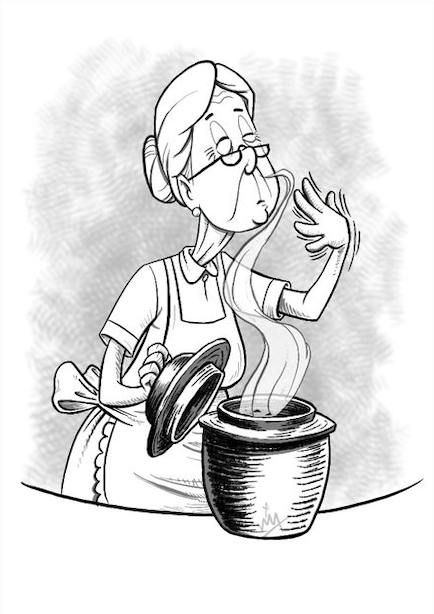
Illustration by Rizal Adnan, a human cartoonist with decades of knowing what funny looks like.
Out of thousands of measurable variables inside a fermenting jar, the research team at the World Institute of Kimchi identified nine that actually matter. Together, those nine signals predict fermentation progress and flavour outcome with precision.
Choosing those nine was not a data task. It was a judgment call, made by people who understood kimchi before they understood machine learning. No algorithm helped them decide. They just had to know.
Now, this is where most organisations quietly lose the plot. They acquire the tool. They skip the question.
AI can report the acidity level at any stage of fermentation. But it cannot explain why this particular combination of bacteria, in this climate, with this cabbage, produces something that tastes the way it does.
A Korean grandmother assessing kimchi readiness does not take a reading. She smells, tastes, checks the texture. Holistic judgment built over decades, which the model is attempting to reconstruct, variable by variable, from the outside. It can approximate. It cannot replace. More importantly, it could not exist without her. Her knowledge had to come first.
Tacit knowledge is not a quaint alternative to data intelligence. It is the source material.
The fermentation has non-negotiable requirements: time, temperature, microbial environment. The AI model was built around those requirements. The kimchi adapted to nothing.
This is not how most organisations deploy AI. They install the tool, then quietly reshape their questions to fit what it can answer. The output arrives promptly and looks convincing. And quite often, it is the right answer to a question nobody actually asked.
The fermentation researchers generated thousands of data points and kept nine. Not because the rest was bad data, but because it told them nothing about the thing they were trying to understand.
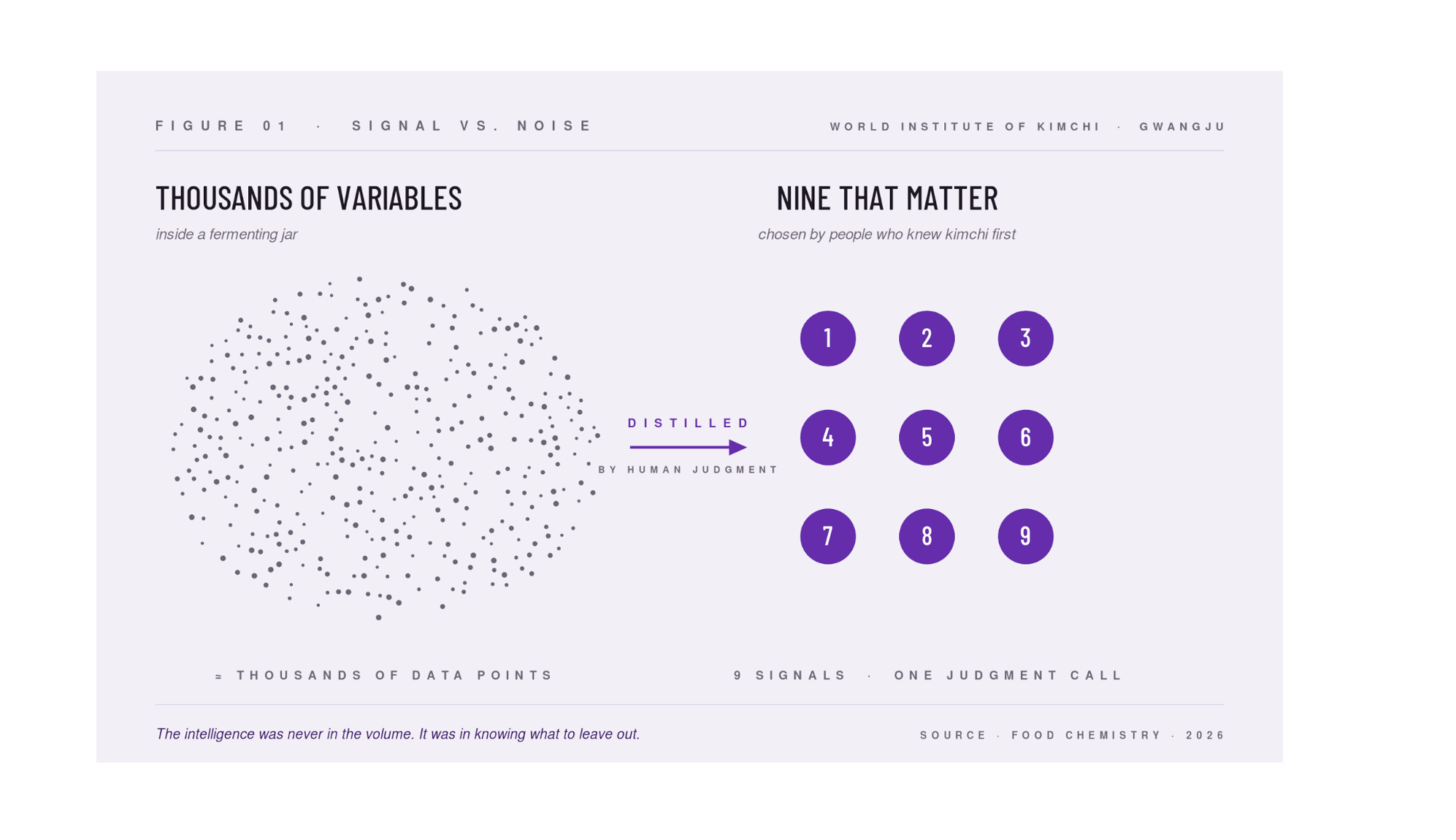
The intelligence was never in the volume. It was in knowing what to leave out. That comes from understanding your domain well enough to know what matters before you start measuring. It does not come bundled with the subscription.
The kimchi was ready when it was ready. The model helped someone who already understood the process confirm it faster. That is useful. That is also the limit.
And knowing the limit is what separates people who use AI well from people who use AI loudly.
The kimchi researchers knew what they were looking for before they ran a single test. That is not a data skill. It is a thinking skill. And it is the one most AI adoption programmes skip.
At The Tenth Floor, we build that thinking with teams: how to form the right question, how to identify which signals actually matter, and how to interrogate what the model returns rather than simply accept it. Then how to use AI to amplify that judgment: to test a hypothesis faster, to surface patterns that would take months to find manually.
Our method is not theoretical. We have done this with clients across enough industries to know the thinking holds. In fact, call us, and we’ll take you through the case studies. Just us, no grandmother present.
The Leadership Team Is Taking Meetings
No pitch. No proposal. A conversation about the real question underneath the problem.